
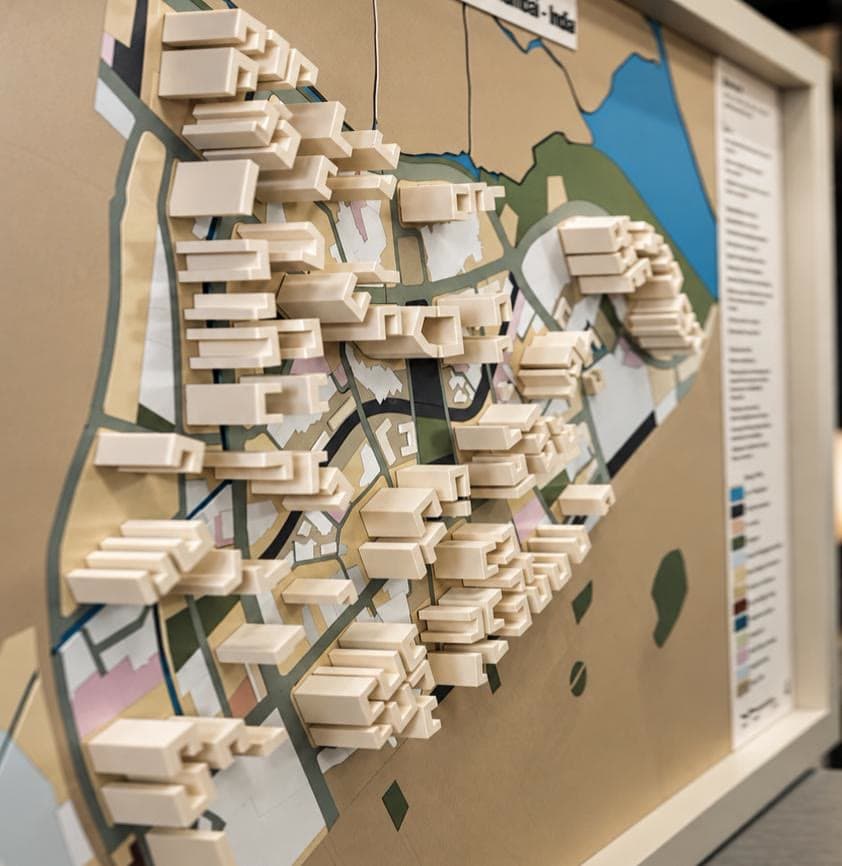
The State of Architectural Model Making in India
From single-workshop craft to a multi-discipline manufacturing operation — how the industry has changed over the last decade, and where it's headed next.
A decade ago, most architectural model workshops in India were small, craft-led operations — a handful of skilled hands working primarily with card, balsa, and hand tools. The projects that come through our own studio today look nothing like that starting point, and the shift says as much about India's construction and real estate sector as it does about the model-making trade itself.
Scale of ambition has changed the brief
Townships spanning hundreds of acres, infrastructure projects competing for global attention, and sales galleries built to compete with any market in the world have pushed model briefs from single tabletop pieces toward large-format installations — some running past 8,000 sq. ft. That shift alone has forced workshops to industrialise: digital fabrication, dedicated production teams by discipline, and project management systems that didn't exist in a craft-only studio.
Digital fabrication didn't replace craft — it extended it
3D printing, CNC routing, and laser cutting are now standard across serious workshops, but the assumption that automation would replace hand skill hasn't played out. Finishing, painting, landscaping, and the judgment calls around how a design detail should actually read at scale are still fundamentally craft work. What's changed is that craftspeople now start from a machine-precise base rather than building every component by hand from scratch, which has raised the baseline quality across the industry.
New categories have opened up
- Kinetic and interactive models with functional moving parts, now common at exhibitions and investor showcases.
- IoT-integrated and sensor-driven installations that respond to a visitor's presence or touch.
- Defense and strategic terrain models built to operational specifications rather than presentation specifications.
- Heritage and archaeological reproductions commissioned by museums and cultural institutions, not just developers.
Where the industry is headed
The workshops that will lead the next decade are the ones building genuine cross-disciplinary teams — metalwork, casting, electronics, and 3D modelling under one roof — rather than treating model making as a single craft. Clients increasingly expect a model to do more than sit still and look accurate: it needs to light up, move, or respond, and that requires capability most traditional workshops simply don't have yet.