
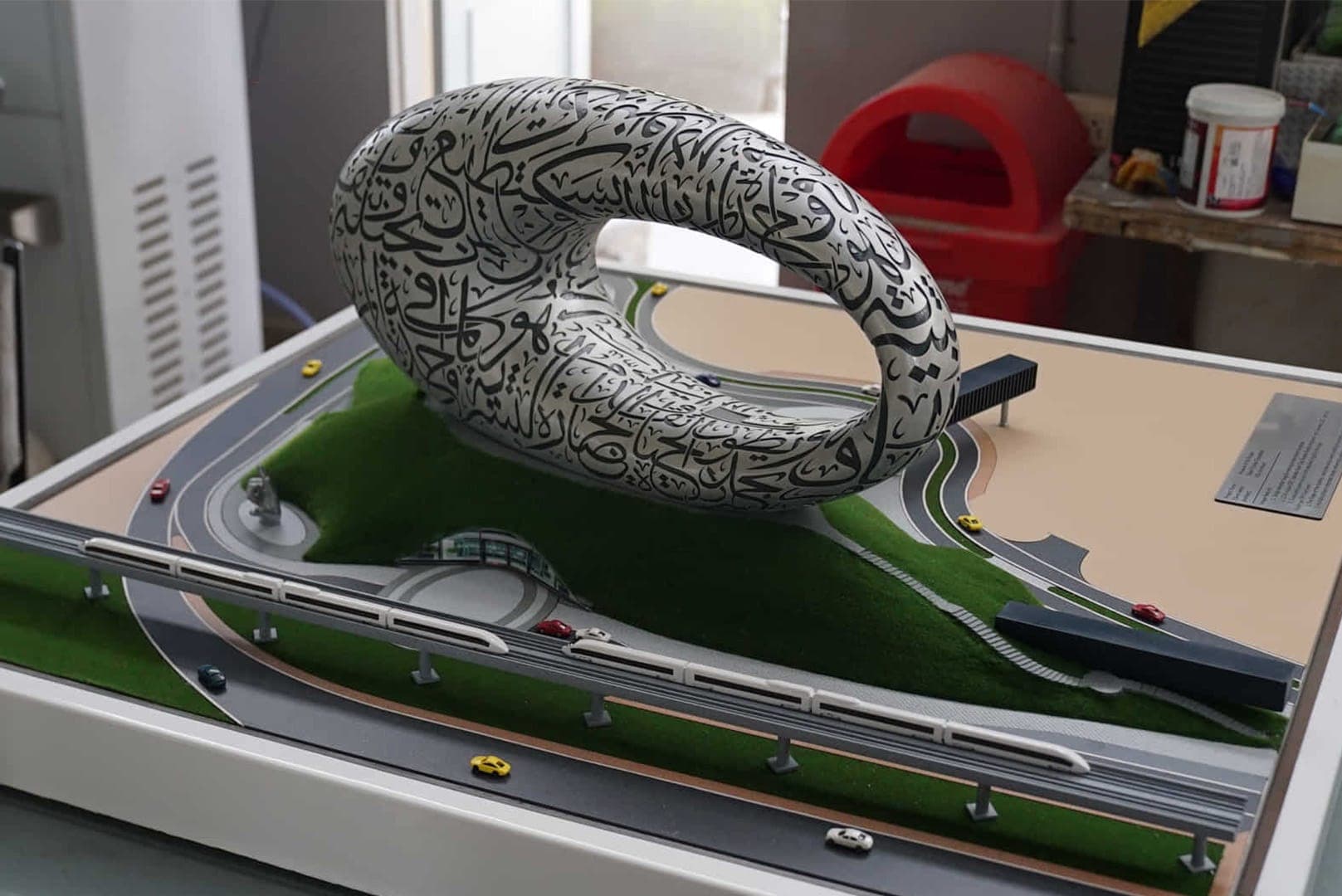
None is universally better; each suits different parts of a model. 3D printing gives fine, repeatable detail; CNC and laser cutting give accurate facades, floor plates and bases; hand finishing delivers landscape, lighting and realism. Premium models combine all three, which is how RD Models builds.
By Ar. Rohitash Daiya · Updated
3D printing
Best for complex or curved forms and small repeated elements such as balconies, trees, vehicles and sculptural towers. RD Models runs 100+ PLA and SLA printers for repeatable detail.
CNC and laser cutting
Best for flat and layered components: facades, floor plates, contours and bases. CNC routers, 5-axis carving and 10+ CO₂ laser machines cut to sub-millimetre tolerance.
Hand finishing
Best for landscaping, water effects, paintwork and micro-detailing. Hand finishing is what makes a model look like a place rather than a part assembly.
Which should you ask for?
- Tight timeline and high repeatability: more digital fabrication.
- Organic landscapes and heritage subjects: more sculpting and hand finishing.
- Premium sales or tender models: a combined approach with lighting.
Frequently asked questions
- Which methods does RD Models use?
- In-house CNC laser cutting, CNC milling, 5-axis CNC carving, vacuum forming, 3D printing and scanning, combined with hand finishing for landscaping, lighting, water effects and micro-detailing.
- Does the method change the price?
- It can. Method, material and finishing time all feed into the itemised quote.
See examples in our Large-Scale Installations portfolio, or browse our workshops across India.